



Eryngium yuccifolium (Rattlesnake Master)
Regular price
$ 14.25
More stock coming soon
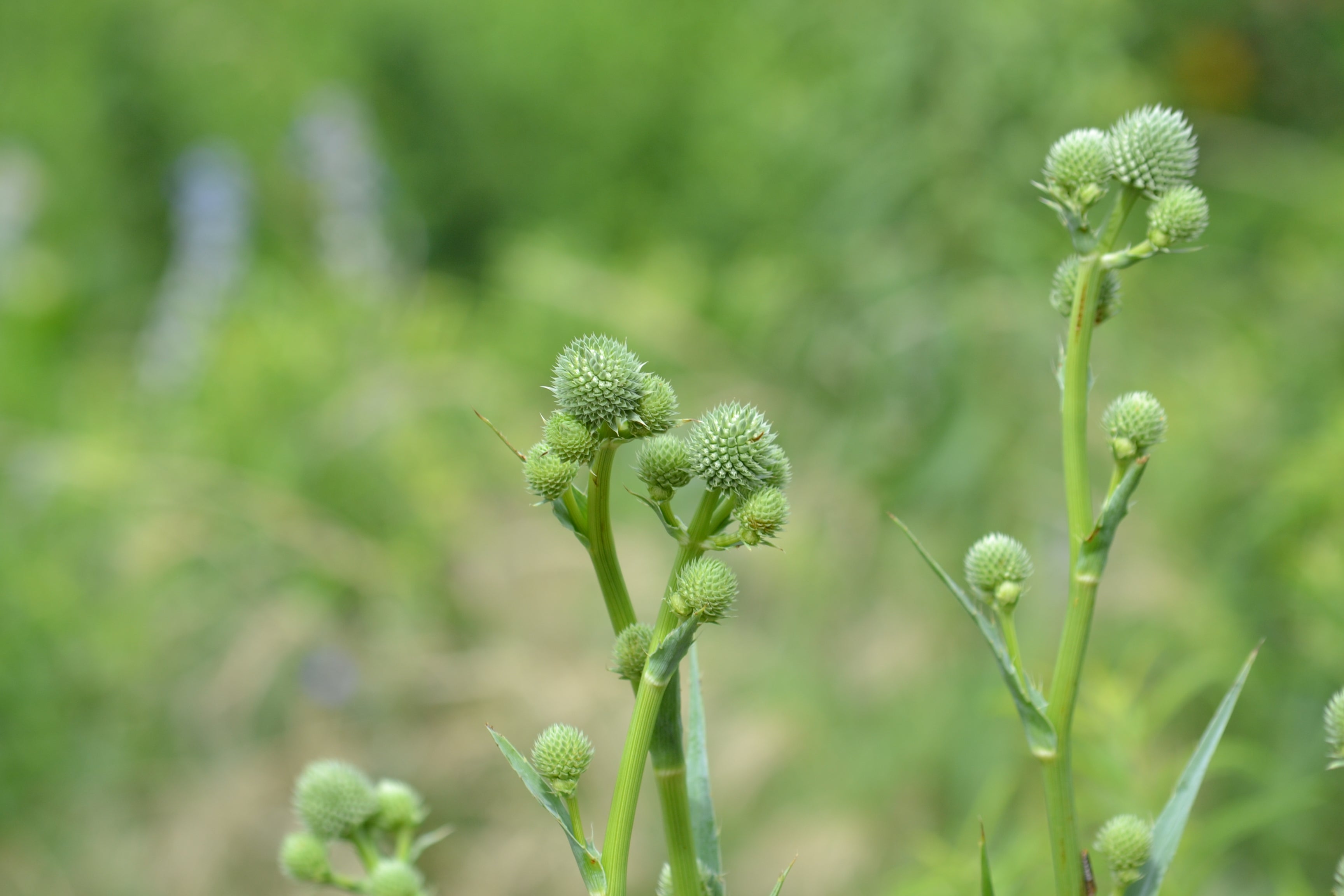
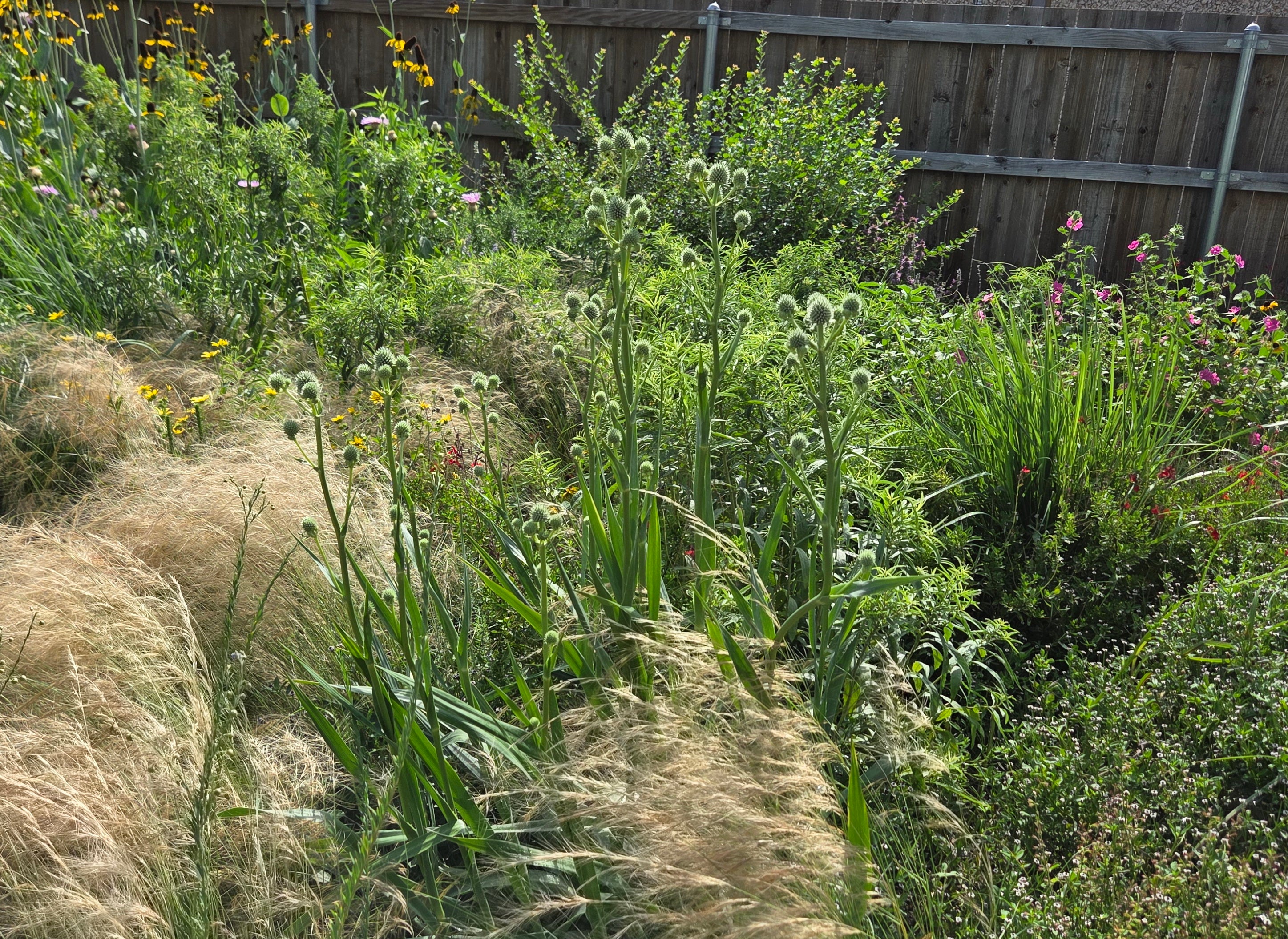
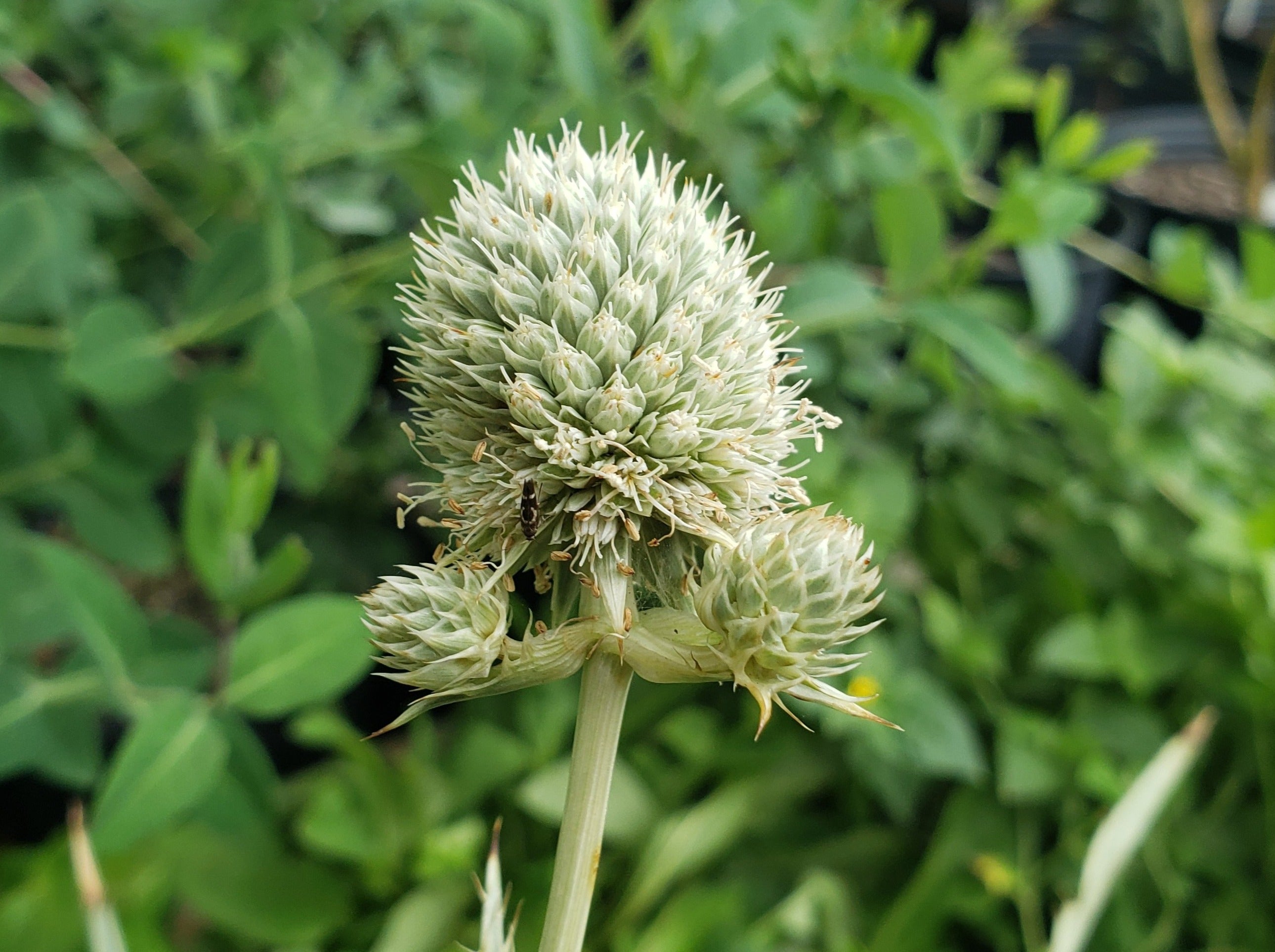
Rattlesnake Master blooms from June until September and the flowers have a sweet honey like scent. The scent attracts many beneficial insects. Various butterflies visit the flower heads for nectar. Soldier beetles visit the flowers to eat pollen; major pollinators include a diversity of bees, wasps, and flies.
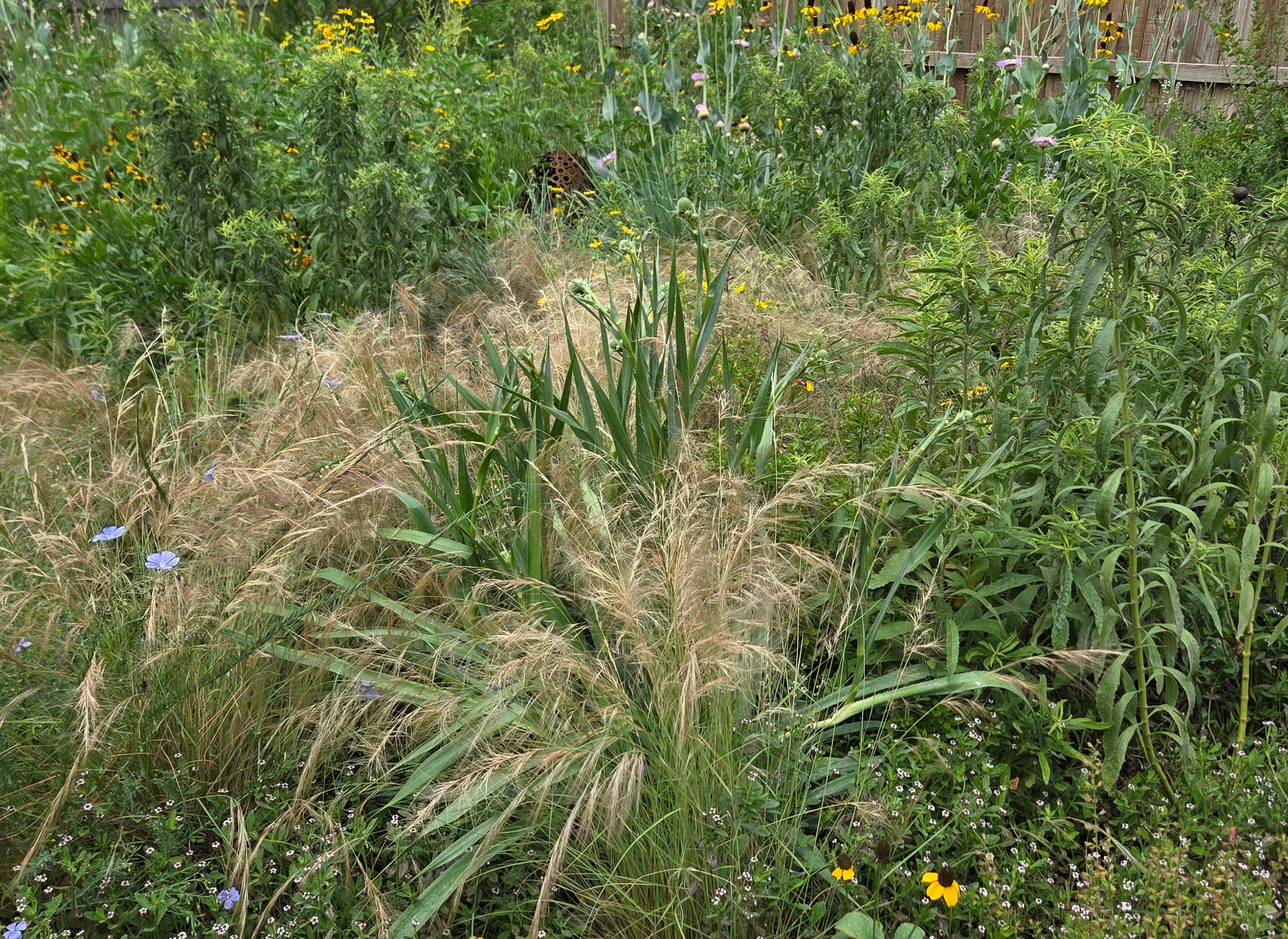
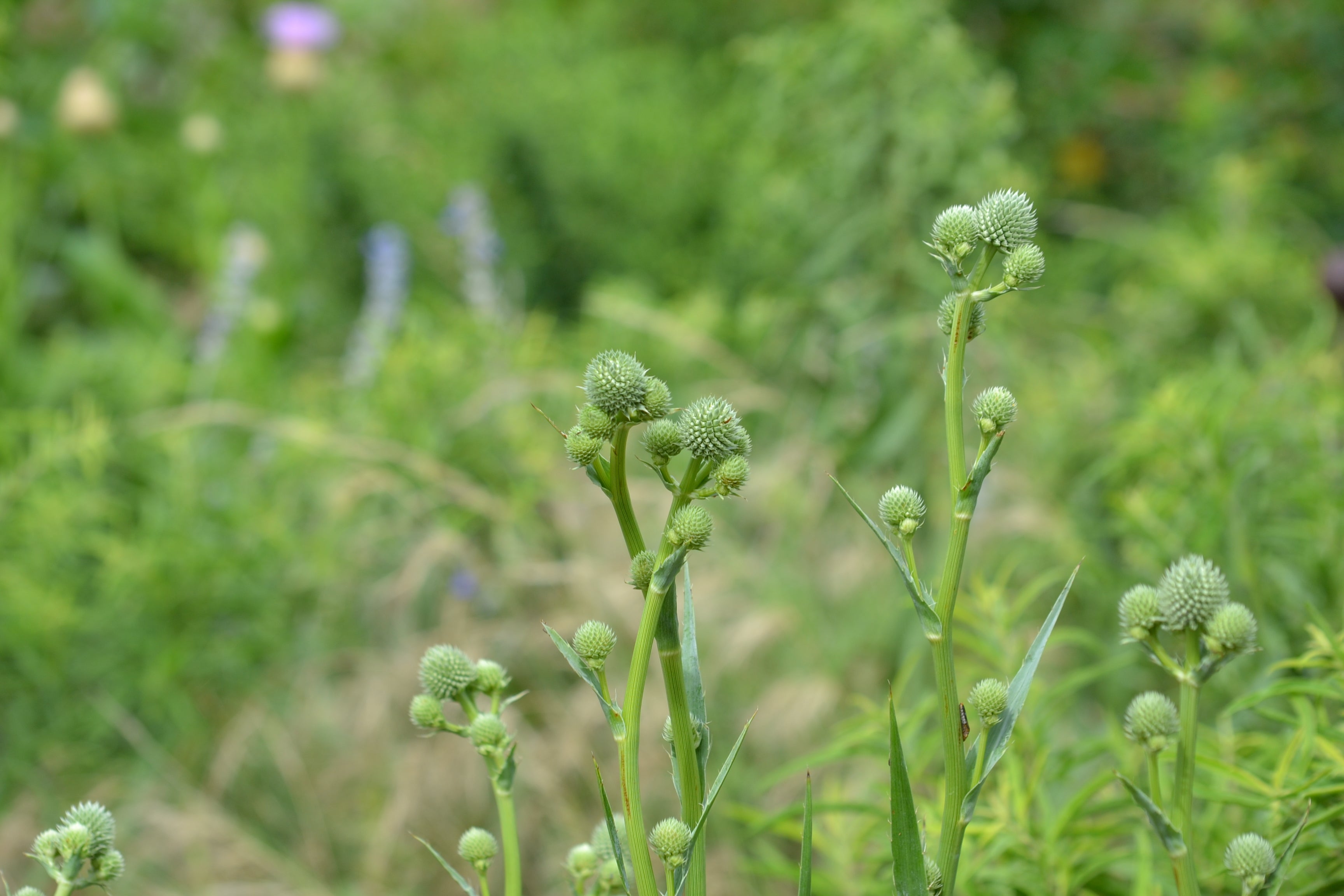
Rattlesnake Master will grow from 2-5 ft tall on a stiff erect stem that is unbranched except at the top giving it a striking vertical look. The leaves wrap around the stem and are long and thin with prickly edges that resemble yuccas.
It grows well on wet or dry mesic prairie soil. Makes an excellent focal point in a garden.
AT A GLANCE
| Texas native | Yes |
| Water use | Medium |
| Sun exposure | Full sun to part sun |
| Mature height | 2-5 ft |
| Mature width | 2-3 ft |
| Bloom color | Greenish white |
| Bloom time | Summer |
| Attracts | Bees, butterflies |
| Host plant | Black Swallowtail butterfly |
| Notes | Native bee friendly. Attracts beneficial insects. |
DISTRIBUTION MAPS
 Present in state Present in state |
 Present in county and native Present in county and native |
 Native to North America, but adventive & escaped in state Native to North America, but adventive & escaped in state |
 Not present in state Not present in state |
 Present and rare, native in county Present and rare, native in county |
 Previously present, now extinct Previously present, now extinct |
 Questionable presence (cross-hatched, regardless of color) Questionable presence (cross-hatched, regardless of color) |
